Burger King Menu Nutrition: Explore the Nutritional Facts
When dining at fast-food chains, understanding the nutritional information of the food is crucial for making informed decisions about our diet. Fast food can be a convenient option, but it often raises concerns about its impact on our health. With the growing demand for healthier eating, it’s essential to explore the nutritional facts behind popular fast-food chains like Burger King.
Burger King’s menu offers a variety of options, from burgers to salads and sandwiches. Being aware of the nutritional content can help consumers balance their diet and make healthier choices. In this article, we’ll delve into the nutritional facts of Burger King’s menu items, providing you with the information you need to make informed decisions.
Key Takeaways
- Understanding nutritional information is crucial for making informed dietary decisions.
- Burger King’s menu offers a variety of options with different nutritional content.
- Being aware of the nutritional facts can help consumers balance their diet.
- Making informed choices is key to maintaining a healthy lifestyle.
- Exploring nutritional facts can help consumers enjoy their favorite foods while staying healthy.
Understanding Burger King’s Nutritional Information
Understanding the nutritional content of Burger King’s menu is crucial for making informed dining choices. Burger King has taken significant steps to provide customers with easy access to nutritional information about their menu items.
How to Access Burger King’s Nutrition Data
Customers can access Burger King’s nutrition data through various channels. The company’s website offers a comprehensive nutrition information page, where customers can find detailed data on calories, macronutrients, and other nutritional facts for their menu items. Additionally, Burger King’s mobile app provides nutrition information, allowing customers to make informed choices on the go.
Reading Burger King’s Nutrition Labels
Once you have accessed the nutrition data, understanding how to read the labels is crucial. Burger King provides clear and concise nutrition labels that outline the nutritional content of each menu item. These labels include information on serving size, calories, total fat, sodium, and total carbohydrates, among other details. By paying attention to these labels, customers can make healthier choices that align with their dietary needs.
Nutritional Transparency Initiatives
Burger King has implemented several nutritional transparency initiatives to help customers make informed choices. The company has committed to providing clear and accessible nutrition information, both online and in-store. Furthermore, Burger King has introduced menu items with reduced sodium and sugar content, catering to the growing demand for healthier fast food options.
By providing easy access to nutrition data and clear labeling, Burger King empowers customers to take control of their dietary choices, promoting a healthier and more informed dining experience.
Burger King Menu Nutrition: A Comprehensive Overview
Understanding the nutritional content of Burger King’s menu is crucial for making informed dining choices. Burger King’s menu is vast and varied, including burgers, chicken items, breakfast options, and more. To navigate this menu healthily, it’s essential to have a clear understanding of the nutritional values of different menu categories.
Caloric Range Across Menu Categories
The caloric content of Burger King menu items varies widely. For instance, a classic Whopper contains around 640 calories, while a smaller option like the Impossible Whopper has approximately 630 calories. Sides like French fries add extra calories, with a medium serving containing about 340 calories.
Here’s a breakdown of the caloric range across different menu categories:
| Menu Category | Lowest Calorie Option | Highest Calorie Option |
|---|---|---|
| Burgers | Impossible Whopper (630 calories) | Triple Whopper (1,180 calories) |
| Chicken | Grilled Chicken Sandwich (380 calories) | Crispy Chicken Sandwich (690 calories) |
| Breakfast | Croissan’wich (350 calories) | Bacon, Egg & Cheese Biscuit (740 calories) |
Macronutrient Breakdown
A closer look at the macronutrient breakdown reveals that Burger King menu items contain a mix of proteins, fats, and carbohydrates. For example, the classic Whopper contains 28g of protein, 42g of fat, and 49g of carbohydrates.
Understanding the macronutrient composition can help diners balance their meal according to their dietary needs.
Sodium and Sugar Content
Sodium and sugar are significant concerns for many consumers. Burger King’s menu items can be high in both. For instance, the Bacon King sandwich contains 1940mg of sodium, while a large order of onion rings has 1240mg.
Sugary items like desserts and sweetened beverages also contribute to high sugar intake. A large Chocolate Shake, for example, contains 86g of sugar.
Being aware of these nutritional aspects can help consumers make more informed choices.
Whopper and Burger Options: Nutritional Analysis
Burger King menu items, particularly the Whopper, offer a range of nutritional facts that are worth examining. The Whopper is a staple on Burger King’s menu, and understanding its nutritional content can help consumers make informed choices.
Classic Whopper Nutrition Facts
The Classic Whopper is a signature sandwich that consists of a flame-grilled beef patty, lettuce, tomato, mayonnaise, ketchup, pickles, and onions on a sesame seed bun. According to Burger King’s nutrition data, a Classic Whopper contains approximately 640 calories, with 37g of fat, 49g of carbohydrates, and 28g of protein. As “The nutritional content of fast food is a growing concern for consumers.”
Specialty Burgers and Their Nutritional Profiles
Burger King offers a variety of specialty burgers, each with its unique nutritional profile. For example, the Impossible Whopper features a plant-based patty and has about 630 calories, with 34g of fat, 43g of carbohydrates, and 25g of protein. In contrast, the Bacon King is higher in calories and fat, with around 840 calories and 58g of fat. Understanding these differences is key to making informed choices.
Comparing Burger Sizes and Their Nutritional Impact
Burger King offers different sizes for some of their burgers, which can significantly impact the nutritional content. For instance, opting for a larger size can increase the calorie count substantially. It’s essential for consumers to be aware of these differences to manage their diet effectively. As noted,
“Portion control is crucial when it comes to fast food.”
In conclusion, the nutritional analysis of Burger King’s Whopper and other burger options reveals a range of choices for consumers. By examining the nutritional facts of these menu items, individuals can make more informed decisions about their diet.
Chicken and Fish Items: Nutritional Breakdown
Burger King’s diverse menu includes several chicken and fish items that are worth a closer nutritional look. These options cater to a wide range of dietary preferences and needs.
Original Chicken Sandwich Nutrition
The Original Chicken Sandwich at Burger King is a popular choice among customers. It features a breaded and fried chicken patty served on a sesame seed bun with lettuce, mayonnaise, and pickles.
Nutritional Highlights: The Original Chicken Sandwich contains approximately 690 calories, with 42g of fat, 44g of carbohydrates, and 31g of protein.
Chicken Nuggets and Tenders Nutrition
Chicken nuggets and tenders are another favorite among Burger King patrons. These items are often served with a variety of dipping sauces.
Nutritional Information: A serving of 4-piece chicken nuggets contains around 190 calories, 12g of fat, 11g of carbohydrates, and 9g of protein. Chicken tenders have a similar nutritional profile, with a 3-piece serving containing about 230 calories, 14g of fat, 14g of carbohydrates, and 12g of protein.
Fish Options and Their Nutritional Value
Burger King’s fish options, such as the Big Fish Sandwich, offer an alternative to their chicken and beef offerings. The Big Fish Sandwich features a breaded and fried Alaskan cod patty served on a sesame seed bun.
Nutritional Details: The Big Fish Sandwich contains approximately 640 calories, with 34g of fat, 52g of carbohydrates, and 25g of protein.
| Menu Item | Calories | Fat (g) | Carbohydrates (g) | Protein (g) |
|---|---|---|---|---|
| Original Chicken Sandwich | 690 | 42 | 44 | 31 |
| 4-piece Chicken Nuggets | 190 | 12 | 11 | 9 |
| Big Fish Sandwich | 640 | 34 | 52 | 25 |
Breakfast Menu: Morning Nutrition at Burger King
When it comes to breakfast, Burger King has a diverse menu that balances taste and nutrition. The breakfast menu is designed to cater to different tastes and dietary needs, offering a range of options from sandwiches to platters.
Breakfast Sandwiches Nutritional Content
Breakfast sandwiches at Burger King come in various configurations, including the popular Croissan’wich and English Muffin sandwiches. The nutritional content varies based on the protein and cheese choices. For instance, a Croissan’wich with sausage, egg, and cheese contains approximately 370 calories, with 24g of fat, 27g of carbohydrates, and 18g of protein.
To make a healthier choice, consider opting for a sandwich with a lower-calorie protein source like egg and cheese, which reduces the calorie count to around 290.
Breakfast Platters and Their Caloric Impact
Breakfast platters at Burger King are more substantial meals that include a combination of items such as eggs, sausage or bacon, hash browns, and toast. These platters are higher in calories, with some options exceeding 700 calories. The caloric impact is significant due to the combination of fried foods and processed meats.
| Breakfast Platter | Calories | Fat (g) | Carbohydrates (g) |
|---|---|---|---|
| Bacon, Egg & Cheese Platter | 720 | 45 | 43 |
| Sausage, Egg & Cheese Platter | 740 | 48 | 41 |
Healthier Breakfast Alternatives
For those looking for healthier breakfast alternatives at Burger King, options like oatmeal or a fruit and yogurt parfait are available. These choices are lower in calories and rich in fiber and protein. For example, a bowl of oatmeal with fruit contains around 160 calories, making it a nutritious start to the day.
Sides, Desserts, and Beverages: Nutritional Considerations
Understanding the nutritional content of Burger King’s sides, desserts, and beverages can help customers make more informed choices. While burgers are a main attraction, the accompanying items can significantly impact the overall nutritional value of a meal.
French Fries and Onion Rings Nutrition
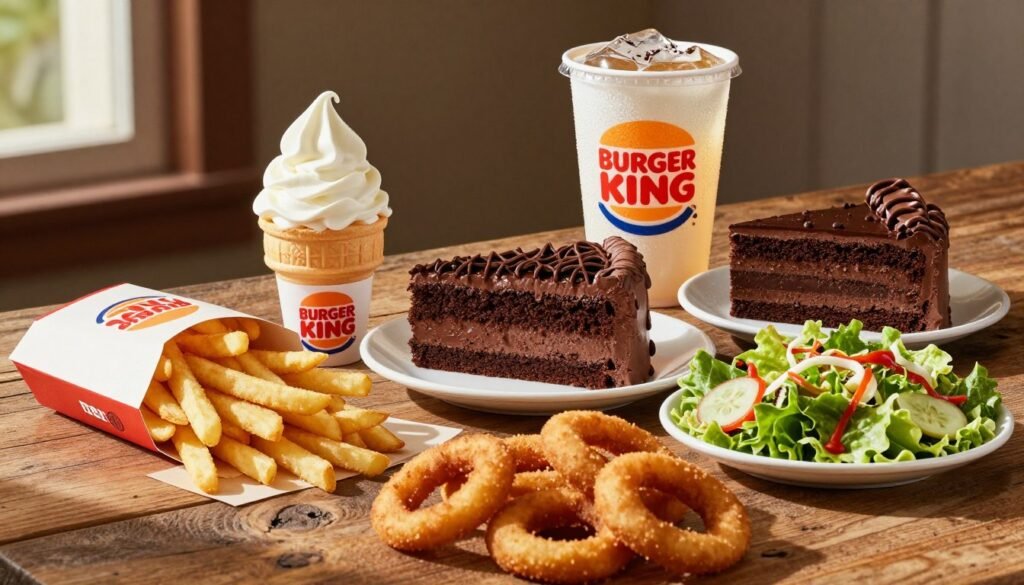
French fries and onion rings are popular sides at Burger King, but they are high in calories and fat. A large order of French fries contains over 500 calories and a significant amount of sodium. Onion rings, while crispy and flavorful, are also calorie-dense. Being mindful of portion sizes can help manage calorie intake.
Dessert Menu Nutritional Analysis
Burger King’s dessert menu includes items like ice cream and apple pies, which can be high in sugar and calories. For instance, a large ice cream cone can contain up to 300 calories and a considerable amount of sugar. Opting for smaller sizes or sharing desserts can be a strategy to enjoy treats while keeping calorie counts in check.
Beverage Options and Their Sugar Content
Beverages at Burger King range from soft drinks to coffee and tea. Many soft drinks are high in sugar, with some servings containing more than 40 grams of sugar. Choosing water, unsweetened tea, or coffee can significantly reduce sugar intake. Being aware of the sugar content in beverages is crucial for managing daily sugar consumption.
Condiments and Add-ons: Hidden Calories
Condiments and add-ons, such as mayonnaise, cheese, and bacon, can add hidden calories to meals. While they enhance flavor, their nutritional impact should not be underestimated. For example, adding cheese to a burger can increase the calorie count by over 100 calories. Being mindful of these additions can help in maintaining a balanced meal.
Healthier Choices at Burger King
Burger King’s menu has evolved to include a range of healthier choices, making it a more viable option for health-conscious diners. While the chain is famous for its indulgent burgers, it has also introduced options that cater to those looking for lower-calorie or nutrient-rich meals.
Lower-Calorie Menu Options
Burger King offers several lower-calorie menu options that can fit into a balanced diet. For instance, opting for a grilled chicken sandwich without the bun significantly reduces calorie intake. Additionally, choosing smaller portion sizes or modifying orders (such as holding the mayonnaise or cheese) can also make a difference.
Reduced-Fat Alternatives
The chain has also introduced reduced-fat alternatives to some of its classic menu items. For example, choosing a smaller size or a different cooking method can reduce the fat content of sides like fries. Moreover, some desserts are lower in fat, providing a sweet treat without excessive calories.
Plant-Based and Vegetarian Choices
Burger King has expanded its menu to include more plant-based and vegetarian options, catering to the growing demand for meatless meals. The Impossible Whopper, for instance, replaces the beef patty with an Impossible Foods patty, offering a similar taste experience with a plant-based twist. Other vegetarian options, such as salads and veggie sandwiches, provide additional choices for those looking to reduce their meat consumption.
By exploring these healthier options, customers can enjoy dining at Burger King while making choices that align with their nutritional preferences or dietary requirements.
Special Dietary Considerations
Burger King recognizes the growing demand for special dietary options and has adapted its menu accordingly. This adaptation ensures that customers with specific dietary needs can enjoy their meals without compromising their health or dietary preferences.
Gluten-Free Options at Burger King
For customers with gluten intolerance or sensitivity, Burger King offers several gluten-free options. While cross-contamination is always a risk in a kitchen that also prepares gluten-containing foods, Burger King’s menu includes items that are inherently gluten-free.
- Salads without croutons
- Grilled chicken sandwiches (without the bun)
- Many of their breakfast items, such as scrambled eggs and bacon
Allergen Information and Food Sensitivities
Burger King takes food allergens seriously and provides allergen information to help customers make informed choices. Common allergens such as peanuts, tree nuts, milk, eggs, fish, shellfish, soy, and wheat are identified for each menu item.
| Menu Item | Common Allergens |
|---|---|
| Classic Whopper | Wheat, Milk, Soy |
| Impossible Whopper | Soy, Wheat |
| Chicken Sandwich | Wheat, Egg, Soy |
Navigating the Menu with Dietary Restrictions
Navigating Burger King’s menu with dietary restrictions requires some knowledge of the ingredients used. Burger King’s website and in-store nutrition guides provide detailed information to help customers make choices that fit their dietary needs.
Conclusion: Making Informed Choices at Burger King
Understanding Burger King Menu Nutrition is crucial for making informed choices that align with your dietary goals and preferences. Throughout this article, we have explored the nutritional facts behind Burger King’s menu items, from the iconic Whopper to breakfast options and sides.
By examining Burger King nutrition information, you can better navigate the menu and select options that fit your nutritional needs. Whether you’re looking to manage calorie intake, avoid certain allergens, or simply make healthier choices, being informed is key.
Burger King’s commitment to nutritional transparency empowers customers to make educated decisions. By leveraging the nutritional data provided, you can enjoy your favorite Burger King meals while maintaining a balanced diet.
As you continue to dine at Burger King, remember that knowledge is power. Use the insights gained from this article to make smarter choices that support your overall well-being.